


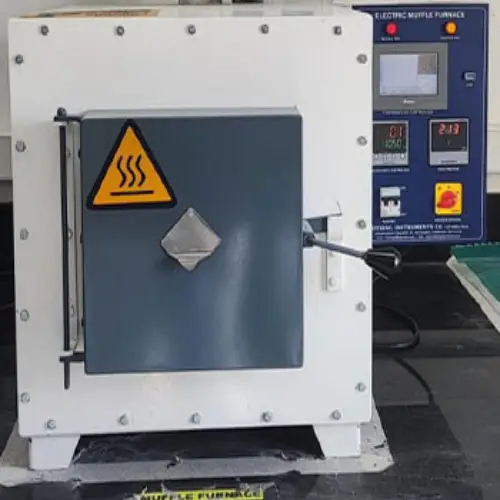
Tray dryers are industrial drying systems designed to remove moisture from products and materials using controlled hot air circulation. They are widely used in pharmaceutical, food processing, chemical, agricultural, nutraceutical and other manufacturing applications where controlled and uniform drying is required.
Hotking Instruments provides tray dryer solutions designed for different production requirements. The equipment can be configured according to the material being dried, batch capacity, required temperature, drying time, tray arrangement and airflow requirements.
A properly designed tray dryer helps provide controlled drying conditions while supporting consistent product quality and efficient processing.
Tray dryers can be designed with features that support reliable and controlled drying operations.
Tray dryers are used across various industries for drying materials that require controlled temperature and airflow.
Tray dryers are commonly used for drying pharmaceutical materials and formulations where controlled drying conditions are required.
They can be used for drying suitable food products, herbs, spices and other materials where moisture reduction is required.
Tray dryers can support drying processes for various chemical materials and products depending on their properties and required processing conditions.
Suitable agricultural and plant-based materials can be dried using controlled hot air circulation.
Tray drying can be used for selected nutraceutical materials where controlled moisture removal is required.
A tray dryer works by circulating heated air through a chamber containing trays loaded with the material to be dried.
The material is placed evenly on the trays, and heated air is introduced into the drying chamber. As the hot air passes around the material, moisture is gradually removed. The temperature and airflow are controlled according to the drying requirements.
The drying time depends on factors such as material characteristics, moisture content, layer thickness, operating temperature, airflow and required final moisture level.
Tray dryers can be configured in different sizes and arrangements depending on the production requirement.
Batch Tray Dryers are suitable for applications where material is loaded and removed after completing each drying cycle.
Industrial Tray Dryers are designed for larger production requirements and can accommodate a higher number of trays.
The equipment can also be configured with different tray sizes, chamber capacities, heating arrangements, airflow systems and temperature-control options.
Every drying process has different requirements. The appropriate tray dryer should therefore be selected based on the material, batch size and desired drying conditions.
Customization may include chamber dimensions, number of trays, tray material, operating temperature, heating capacity, airflow arrangement, insulation, door configuration and control system.
Before selecting a tray dryer, important factors such as product characteristics, initial moisture content, required final moisture level, batch capacity and drying time should be considered.
A suitable tray dryer can provide controlled drying conditions, repeatable drying cycles and efficient moisture removal. The batch-based design also provides flexibility for different product quantities and processing requirements.
Tray dryers are particularly useful when a controlled drying environment is required and the material can be processed in trays.
Hotking Instruments has been involved in manufacturing industrial and laboratory equipment since 1994. Our approach focuses on understanding the application and developing equipment around the actual process requirements.
Tray dryer configurations can be discussed according to temperature, capacity, airflow, tray arrangement and other technical requirements.
A tray dryer is a batch drying system that uses heated air circulation to remove moisture from materials placed on trays inside a controlled drying chamber.
Tray dryers are used for drying suitable pharmaceutical, food, chemical, agricultural and nutraceutical materials where controlled moisture removal is required.
Heated air is circulated through the drying chamber containing trays of material. The heat and airflow help remove moisture from the product during the drying cycle.
Yes. Tray dryers can be configured according to chamber size, number of trays, temperature range, heating capacity, airflow and control requirements.
Drying time depends on the material, moisture content, product thickness, operating temperature, airflow and required final moisture level.

Leading manufacturers of high-performance tray dryers designed for uniform drying applications across multiple industries.
Read More
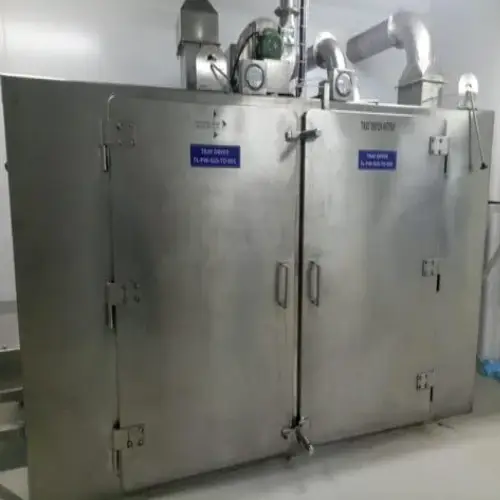
Precision dryers for the pharmaceutical industry, ensuring uniform drying of sensitive materials with advanced temperature control.
Read More
Cabinet tray dryers are designed for drying materials in a controlled environment
Read More
Electric tray dryers are essential for drying various products using electric heating.
Read More
Pharmaceutical ovens are specifically designed for the pharmaceutical industry to ensure product integrity.
Read More
Vacuum tray dryers use a vacuum environment to enhance the drying process.
Read More
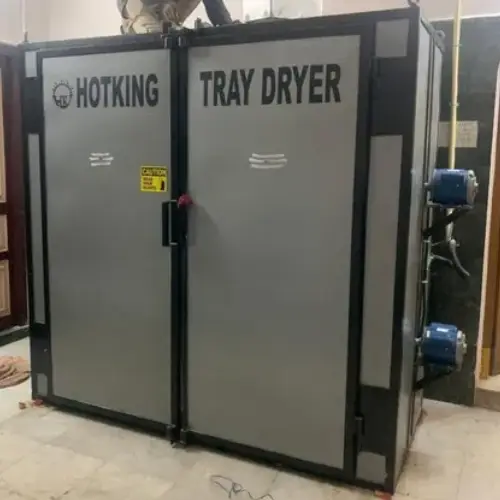
Exporters of tray dryers specialize in providing high-quality drying equipment for various applications.
Read More
Indian manufacturers and exporters of tray dryers focus on delivering reliable and efficient drying solutions.
Read More
Efficient dryers tailored for cashew processing, providing controlled drying to enhance texture and quality of nuts.
Read More
Fast-acting infrared dryers ideal for quick drying, using infrared technology to optimize energy use and speed.
Read More
Automated tray dryers for high-capacity drying applications, featuring programmable settings for precision and ease.
Read More
Cost-effective electric tray dryers offering consistent drying results, suitable for lab and industrial use.
Read More
Another model of electric tray dryer designed for consistent drying with efficient heat distribution for various industrial needs.
Read More